
If you’ve got a sloping backyard, a driveway that drops off at the edge, or a yard that washes out every time it rains hard, you’ve probably already started pricing out a retaining wall — and run into the same problem everyone does: it’s hard to find a straight answer on cost. That’s because retaining wall pricing genuinely depends on several site-specific factors, not a flat rate per foot.
Here’s what actually drives the price for homeowners across Tulsa, Owasso, Broken Arrow, Jenks, Bixby, and the surrounding metro.
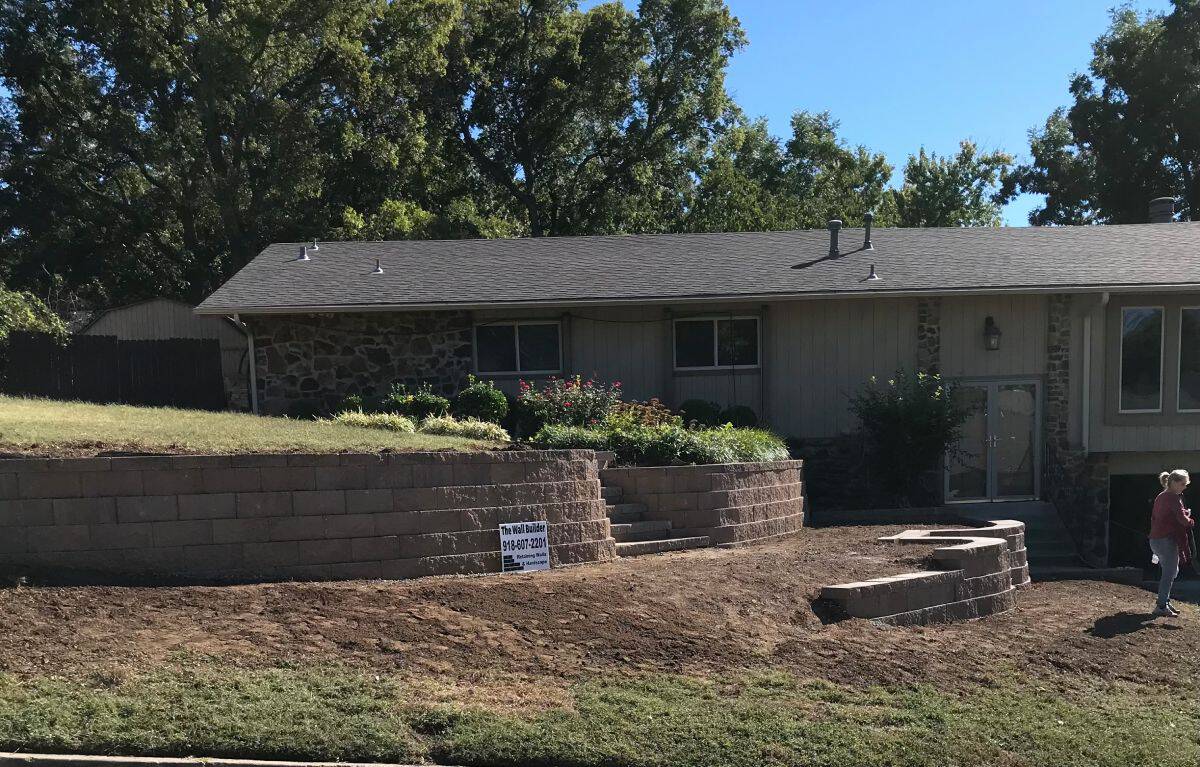
What Affects Retaining Wall Cost
Six factors do most of the work in determining your final price:
- Wall height — a low garden wall costs far less than a tall structural wall, which may also require engineering review
- Material — segmental block, natural stone, timber, and poured concrete all carry different material and labor costs
- Length — total linear footage of the wall
- Site access — tight side yards or steep slopes that limit equipment access add labor time
- Drainage requirements — proper drainage behind the wall adds cost up front but is what actually makes a wall last
- Soil conditions — Oklahoma’s clay-heavy soil often needs more excavation and base preparation than sandier soils
Why Drainage Costs More — and Why It’s Worth It
Typical Retaining Wall Projects We Build
Most of the projects we take on across the Tulsa metro fall into a few general categories:
- Small garden or terrace walls (roughly 1–3 feet) — the lowest end of the cost range, often more about landscaping structure than slope control
- Driveway or slope walls (roughly 3–5 feet) — the most common request, usually addressing erosion or a drop-off along a driveway or side yard
- Larger structural walls (5+ feet) — these typically require engineering and permitting, and sit at the higher end of the range
DIY vs. Professional Installation
Getting an Accurate Quote
Frequently Asked Questions
Do retaining walls need a permit in Tulsa?
Taller walls (typically over 4 feet) often require a permit and engineering review depending on your city. We handle that process as part of the project.
How long does a retaining wall installation take?
A small garden wall might take a day or two; larger structural walls with drainage work and engineering can take one to two weeks. We provide a clear timeline as part of your quote.
Can an existing retaining wall be repaired instead of replaced?
Sometimes — it depends on whether the failure is cosmetic (minor cracking, slight settling) or structural (leaning, bulging, or drainage failure). We assess this on-site and give you an honest recommendation.